
Home automation built on a network that holds up
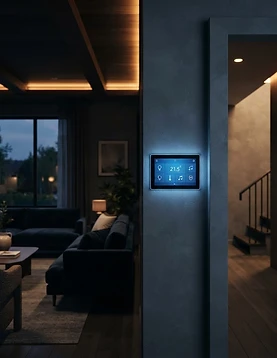
Lighting, climate, shades, locks and audio working from one app and one wall panel, on a network designed for the devices rather than added afterwards. We plan the system, install it, and support it after the handover.
The problems this solves
Automation on a network never meant for it
Most systems are installed on the household Wi-Fi, and every device added makes it a little less reliable. Lights stop responding, a panel drops off for a minute, and the whole house feels broken. A network designed for the devices is the difference between a system that works daily and one that needs rebooting.
Six brands, six apps
Buying a smart device for each job leaves one app per brand, and nothing that ties them together. Scenes, schedules and a single panel mean the system behaves like one installation instead of a collection of gadgets.
Nobody to call when it stops
Automation installed and left is common. When a device fails or a schedule misbehaves, the installer is gone and the app store is not support. We stay on the system, so the answer is a phone call to the people who built it.
What an installation covers
- +Lighting, climate, shades and audio control
- +Wall panels, keypads and mobile control
- +A dedicated network for smart devices
- +Integration with locks, cameras and doorbells
- +Scene and schedule programming
- +Remote access set up securely
Who it suits
- Homes being built or renovated, where cabling can still be planned
- Houses where the Wi-Fi drops and devices go offline
- Owners who want one control system instead of six apps
- Second homes and rentals that need remote oversight
Where we work
Home automation work is on site across Long Island, Nassau County and Suffolk County, scheduled from our Massapequa office, and the same team supports the network underneath it. Remote support covers settings, schedules and remote access; installation is always on site.
Common questions
- Can you work with the system we already have?
- Often, yes. We start by listing what is installed and what it runs on, then say plainly which parts can stay, which need replacing, and what the change would cost. If the existing hardware is fine and only the network is letting it down, we fix the network first.
- Does the house have to be rewired?
- Not usually. Where walls are open during a renovation we recommend cabling, because it is cheaper now than later. In an existing house most devices run wirelessly, which makes the network design the thing that decides whether the system is reliable.
- Who looks after it after it is installed?
- The same team that installed it. Adjustments, replacements, adding a room, or a device that keeps dropping off the network are handled by the people who designed the system, not passed to a different company.
Plan a system around your home
Tell us the rooms, the devices you already own, and what you want to stop doing by hand. We will come back with what the system needs, including the network.